Building Nitara: The 5 Hardest Problems We Solved in Indian Dairy ; And the Ones We’re Solving Next
By Amee DesaiSep 16, 2026
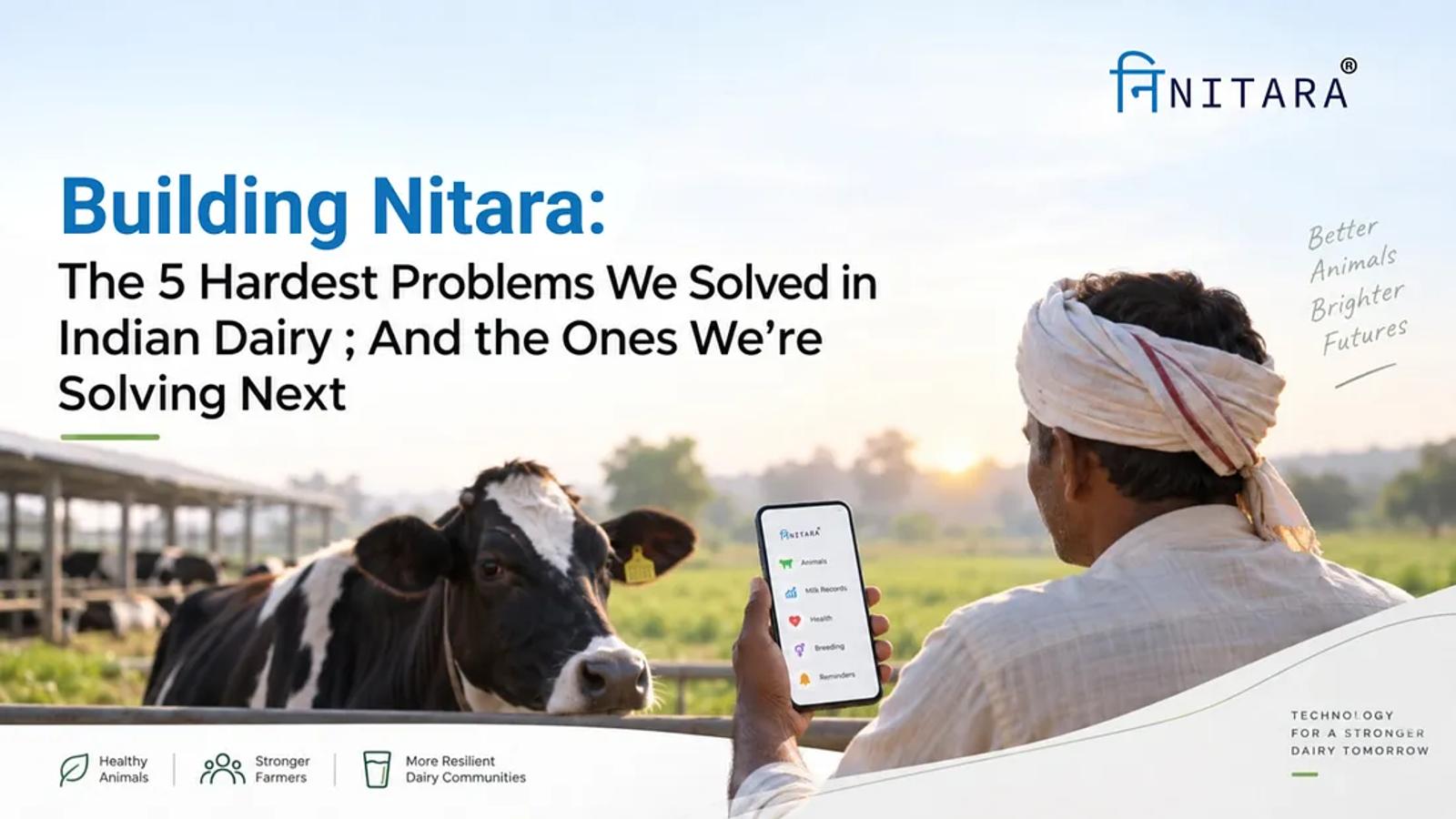
Building technology for Indian dairy sounds simple on paper.
Track cattle. Record milk. Send alerts. Connect farmers with experts.
But once you start building for real dairy farms, you realise very quickly that the hardest problems are not always technical. They are about behaviour, trust, accessibility, fragmented information and making technology useful enough to become part of someone’s everyday routine.
At Nitara, these are five of the hardest problems we’ve worked on so far.
1. Making farmers want to record data
Every dairy platform needs data. Milk records. Breeding records. Vaccination history. Treatments. Calving. Feeding. Health events.
But farmers do not wake up wanting to maintain a database. They want answers.
Why has milk reduced? When is the right time for AI? Is the animal showing heat signs? When is the next vaccination due? That changed the way we thought about data. A farmer should not record something simply because the system needs it. Every entry should create value later through reminders, trends, alerts or a clearer animal history.
One of our biggest learnings has been: Data collection cannot be the product. Value has to be the product. When farmers see that yesterday’s record can help them make a better decision today, digital record-keeping starts becoming meaningful.
2. Making complex dairy intelligence simple
Dairy decisions are rarely straightforward. A drop in milk production could have several reasons. Weak heat signs can easily be missed. A treatment may need follow-up. Changes in feeding or behaviour can indicate a larger health issue.
Technology can generate more information around all of this. But more information does not automatically mean better decisions. Our challenge was to simplify complicated dairy intelligence without making it meaningless. Whether through heat alerts, disease-related tools, GauGuru or PocketVet, the real question is not only: Can technology identify something?
It is: Can the farmer understand it, trust it and know what to do next?
That distinction has shaped a lot of what we build.
3. Designing for many different dairy users
There is no single “Indian dairy user.” A farmer managing three animals has very different needs from a commercial farm managing hundreds. A veterinarian needs clinical history.
An AI technician needs breeding information.
A farm manager needs visibility across the herd. A milk collection center needs quantity, fat, farmer and payment records.
This meant we could not build one product and expect everyone to work around it. Instead, Nitara evolved into an ecosystem with different tools for farmers, dairy service providers, farms and milk collection operations.
The goal is not to put every stakeholder on the same screen. The goal is to make sure those screens can eventually speak to each other.
4. Building trust before automation
In dairy, technology is dealing with something far more important than clicks and dashboards.
It is dealing with an animal’s health and a farmer’s livelihood. A wrong decision can mean delayed conception, lost milk production, unnecessary treatment or financial loss.
That makes trust incredibly important. An alert has to arrive at the right time. A recommendation has to make sense. A farmer needs to feel that the system understands the animal’s history instead of simply generating another notification.
This is also why we believe technology should support human judgement, not replace it. AI can identify patterns. Data can highlight risks. Reminders can prevent important events from being missed.
But veterinarians, farmers and farm teams remain central to the decision.
The future of dairy technology is not humans versus technology. It is better-informed humans using better technology.
5. Connecting information that has traditionally remained fragmented
This may be one of the biggest problems of all. A breeding date may be remembered by the farmer. Treatment details may be with the veterinarian. Milk data may be recorded separately.
Payment information may sit with the milk collection centre. Farm performance may be tracked somewhere else entirely. When information is fragmented, decisions become fragmented too.
We believe the larger opportunity is to create a meaningful digital journey for every animal.
Imagine an animal’s heat alert leading to a breeding record, followed by pregnancy information, calving, vaccination, health events, treatment history and milk production — all connected over time.
Instead of looking at isolated events, farmers and dairy professionals begin to understand the full story of the animal.
That is the direction we are building toward.
What Are We Solving Next?
Solving one problem usually reveals another. The next phase for Nitara is about moving further from reactive dairy management toward proactive decision-making.
Can we help detect health risks earlier?
Can every animal have a reliable digital history?
Can veterinarians and dairy experts become accessible to farmers regardless of location?
Can farmers identify patterns before they become visible problems?
And can the farmer, veterinarian, technician, farm and milk collection centre become part of one connected ecosystem?
These are difficult problems. But they are also what make this journey exciting. Building Nitara has taught us that innovation in dairy does not always look dramatic.
Sometimes innovation is simply a heat alert reaching a farmer at the right moment. Sometimes it is a veterinarian being able to see an animal’s treatment history. Sometimes it is a farm manager spotting a milk-production trend earlier. And sometimes it is replacing:
“I think this happened last month.”
with:
“Here is the exact record.”
Each of these improvements may look small in isolation. But across thousands of farmers and animals, small improvements can create very meaningful impact.
And that is what keeps us building.
Related articles
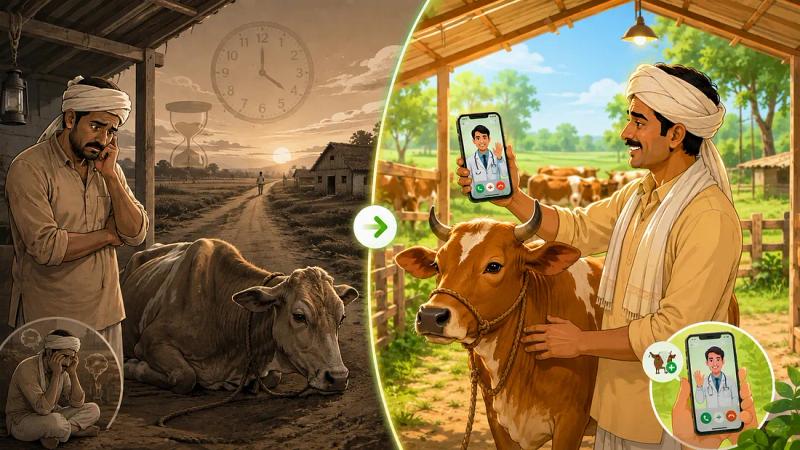
PocketVet: Rebuilding Veterinary Care for Rural India
Nidhi JaikumarAug 18, 2026
Read article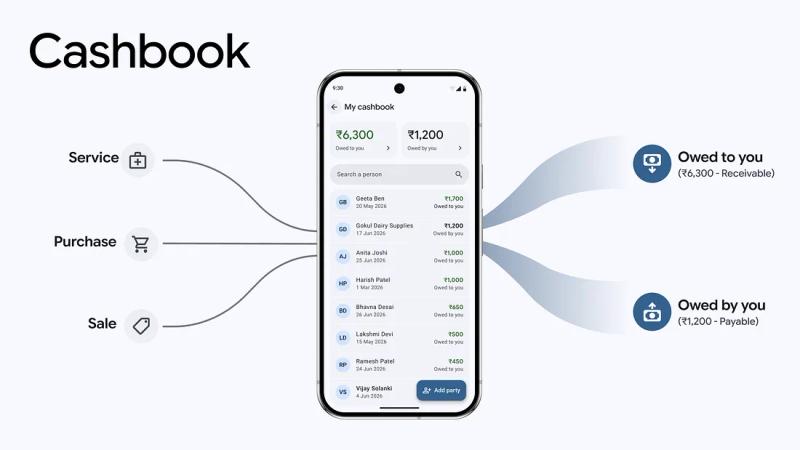
My Cashbook: Streamlines financial tracking for dairy service providers
Akshat JainAug 18, 2026
Read article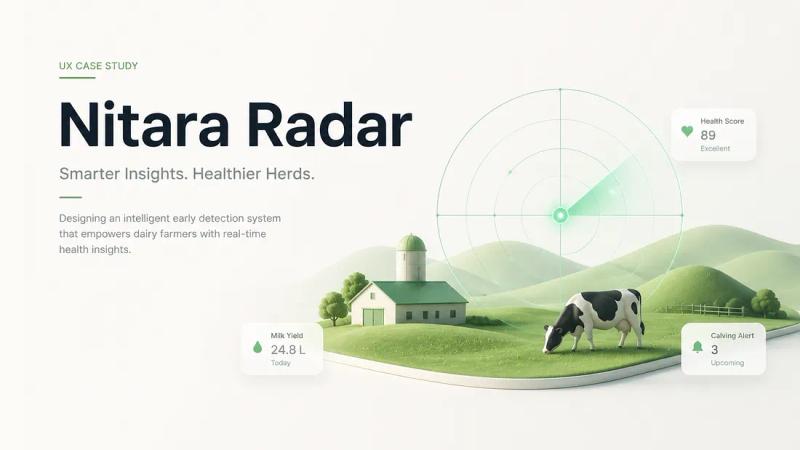
Nitara Radar: Solving the real-time discovery gap in rural dairy farming
Akshat JainAug 11, 2026
Read article